
Monday, January 19, 2026

How Jason Momoa Is Helping Hawaiian Airlines Become More Sustainable

Share

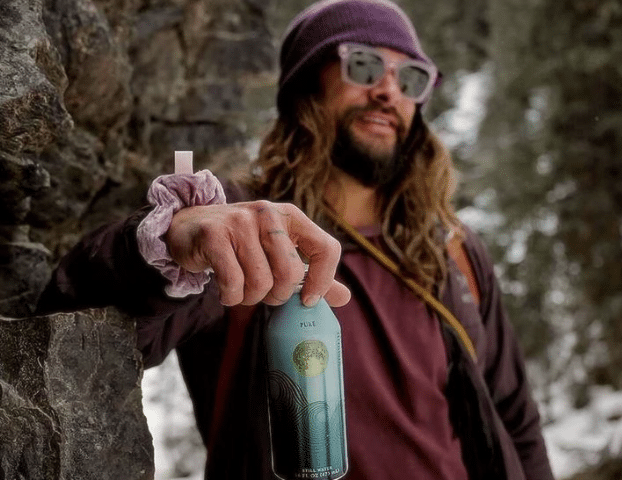
In a new partnership, Jason Momoa and Hawaiian Airlines are replacing plastic water bottles in flight with the actor’s aluminum bottled Mananalu water.

Mananalu, the bottled water company founded by actor, activist, and entrepreneur Jason Momoa, says it’s now the featured water option in Hawaiian Airline’s premium cabins. The water comes in what the brand calls “infinitely recyclable” aluminum bottles.

The Mananalu water replaces plastic water bottles on all East Coast and international flights, the airline says as well as replace the bottled water that comes with its snack cart on flights between the Hawaiian islands and 16 U.S. cities.

“We have remained steadfast in our commitment to source more sustainable products for our onboard service, and our Mananalu partnership helps us continue to phase-out single-use plastics and protect our oceans and environment,” Avi Mannis, chief marketing and communications officer at Hawaiian Airlines, said in a statement.

The move builds on Hawaiian Airlines’ efforts to make its operations more sustainable. The airline has pledged to achieve net-zero carbon emissions by 2050. According to the airline, the shift to Mananalu will reduce more than 140,000 plastic water bottles per year.  

“We couldn’t be more thrilled to partner with Hawaiian Airlines. Together we’re reducing single-use plastic bottles on flights and removing plastic from our oceans. It’s perfect brand alignment,” said David Cuthbert, CEO of Mananalu.

For each bottle replaced in-flight, Mananalu also diverts another bottle from entering oceans and waterways through its work with Repurpose Global, a plastic action platform.

The water bottles are made from BPA-free aluminum, making them not only a more sustainable alternative to plastic, but a healthier one, too. BPA is linked to numerous health issues including metabolic and reproductive disorders.

Manunalu says its water is responsibly sourced and triple-filtered drinking water with added electrolytes and a neutral pH.

Jason Momoa, activist and entrepreneur

Momoa founded Mananalu in 2019, building on the Aquaman star’s passion for environmentalism. The Hawaiian native has lent his star power to a number of causes aimed at protecting the islands and oceans. In 2019, the actor joined activists at Mauna Kea, the dormant volcano on the island of Hawai’i to protest a proposed telescope on the sacred land.

Mananalu isn’t Momoa’s only business venture addressing climate change. Last year he partnered with So Ill on a line of vegan shoes and gear made from sustainable and recycled materials.

The shoes were a natural extension of his activism, he told Footwear News last year.

“Just thinking about sandals and all the waste that goes into it. Being in the islands where I was born and going to see my father, seeing all the flip flops, the sandals. If I could make something that was algae-based and you could put that in your garden and it’s completely compostable — that would be amazing,” he said.

Courtesy Electric

Earlier this year, Momoa launched a new collection of sustainable eyewear with Electric with proceeds going to support Sustainable Coastlines Hawai’i.

“My friends run deep in the surf and moto culture and introduced me to the Electric brand,” Momoa said in a statement. “I loved the eyewear styles and wanted to create an earth-friendly collaboration with my personal touch to wear and help give back to charities protecting Hawai’i.”

The star has also taken his message to world leaders at the U.N., urging them to take immediate action on climate change. “We are a disease infecting our planet… From the atmosphere to the Abyssal Zone, we are polluted,” he said in 2019 at the Global Assembly.

“We are the living consequence of forgotten traditions. We suffer the collective amnesia of a truth that was once understood. The truth that to cause irreversible damage to the earth, is to bring the same onto ourselves. We the island nations and all coastal communities are the front lines of this climate crisis,” he said.

“We can no longer afford the luxury of half-assing it as we willingly force ourselves beyond the threshold of no return,” Momoa warned. “As a human species we need the earth to survive. And make no mistake, it doesn’t need us.”

Related

Flashback to Sustainable Fashion’s Early Circular Moves In 2016

As 2016 resurfaces in our feeds, we take a look at how sustainability wove through fashion that year — from recycled denim and water-saving techniques to early circular commitments from brands big and small.

How Wildflower Loss Shaped Stella McCartney’s SS26 Collection

Stella McCartney’s SS26 collection references Britain’s disappearing wildflower meadows through hand-embroidered tailoring, continuing the label’s long-standing practice of embedding environmental themes into design and materials.

How L’Oréal Is Testing Sustainable Innovation at Scale

L’Oréal has revealed the first cohort for L’AcceleratOR, its €100 million sustainable innovation program, selecting 13 companies focused on packaging, ingredients, circular systems, and emissions data. The group was chosen from nearly 1,000 applicants and represents the first pilot phase of the five-year initiative, which is designed to identify, test, and potentially scale sustainability-focused technologies across the company’s global operations and the wider beauty industry. https://www.loreal.com/en/press-release/sustainable-development/-l-oreal-announces-the-first-13-change-makers-chosen-to-join-its-eur-100-million-sustainable-innovation-l-accelerator-program/ Launched in 2024, L’AcceleratOR was created to move beyond concept-stage innovation and toward commercial deployment, with a particular emphasis on solutions that can be piloted within existing industrial systems. The program is operated in partnership with the University of Cambridge Institute for Sustainability Leadership, which is overseeing a structured support phase centered on pilot readiness and business integration. https://www.cisl.cam.ac.uk/ Rather than narrowing its scope to a single sustainability challenge, L’Oréal has positioned the accelerator around a broad set of operational priorities, including low-carbon materials and energy, nature-sourced ingredients, water resilience, the reduction of fossil-based plastics, circular manufacturing processes, and inclusive business models. The composition of the first cohort reflects that approach, with selected companies spanning physical materials, chemical inputs, waste transformation, and digital infrastructure. https://www.esgtoday.com/loreal-backs-13-climate-nature-and-circularity-solutions-startups/ Packaging, Materials, and the Push Away From Fossil Inputs Several of the selected companies focus on rethinking packaging formats that remain deeply embedded in beauty supply chains. United Kingdom-based Pulpex is developing recyclable paper bottles intended to replace rigid plastic packaging, while Japan’s Bioworks produces bioplastics derived from sugarcane and other plant-based feedstocks. Sweden’s Blue Ocean Closures and PULPAC are advancing fiber-based packaging systems designed to reduce both material complexity and carbon intensity, and Estonia’s RAIKU transforms natural wood into protective packaging alternatives traditionally made from petroleum-based foams. https://esgpost.com/loreal-selects-first-13-start-ups-for-laccelerator-sustainability-programme/ Ingredients and formulation inputs are also central to the cohort. France-based Biosynthis focuses on renewable and biodegradable raw materials, while U.S. company P2 Science applies green chemistry principles to develop bio-sourced fragrance and ingredient components. Another U.S. firm, Oberon Fuels, converts wood and pulp waste into renewable dimethyl ether suitable for aerosol formulations, addressing a category that has historically relied on fossil-derived propellants. https://esgpost.com/loreal-selects-first-13-start-ups-for-laccelerator-sustainability-programme/ Circular Systems and Measuring What Matters Circularity solutions appear throughout the cohort, including Belgium’s Novobiom, which uses fungi to break down complex waste streams into higher-value materials, and France’s REPLACE, which has developed a single-step process to convert multi-layer waste into new durable products. From Brazil, Gàs Verde contributes biomethane production technology aimed at reducing fossil fuel use in industrial energy and transport. https://esgpost.com/loreal-selects-first-13-start-ups-for-laccelerator-sustainability-programme/ The only data intelligence company selected, United Kingdom-based Neutreeno, focuses on supply-chain emissions measurement and reduction, reflecting the growing role of digital infrastructure in meeting climate targets and regulatory expectations. https://www.esgtoday.com/loreal-backs-13-climate-nature-and-circularity-solutions-startups/ The thirteen companies will now enter a CISL-led support phase focused on pilot readiness, with opportunities to run six- to nine-month pilots and, if successful, scale solutions across L’Oréal’s operations. Ezgi Barcenas, Chief Corporate Responsibility Officer at L’Oréal, described the approach as intentionally collaborative, saying, “To accelerate sustainable solutions to market, we are being even more intentional and inclusive in our pursuit of partnerships through L’AcceleratOR. We are really energized to be co-designing the future of beauty with CISL and these 13 change-makers.” https://www.esgtoday.com/loreal-backs-13-climate-nature-and-circularity-solutions-startups/ L’AcceleratOR sits within the company’s broader ten-year sustainability strategy, which includes goals to reach one hundred percent renewable energy, source at least ninety percent bio-based materials in formulas and packaging, reduce virgin plastic use by fifty percent, and significantly cut Scope One, Scope Two, and selected Scope Three emissions by 2030. https://www.loreal.com/en/commitments-and-responsibilities/

What Is Eco Brutalism? Is It the Beginning or the End of Sustainable Design?

Eco-brutalism is an architectural style gaining popularity for combining brutalist design elements with greenery to create a unique aesthetic and the perception that it is more sustainable than traditional brutalism. However, it has also faced criticism, particularly regarding its sustainability status.

Six Senses Kanuhura Launches a Coral Reef Monitoring First in the Maldives

Six Senses Kanuhura has introduced an advanced coral-monitoring program that gives travelers a new reason to visit the Maldives — one rooted in reef science, long-term protection, and meaningful marine conservation.