
Monday, January 19, 2026

Selena Gomez Pens Heartfelt New York Times Letter to Her Rare Beauty Team

Share

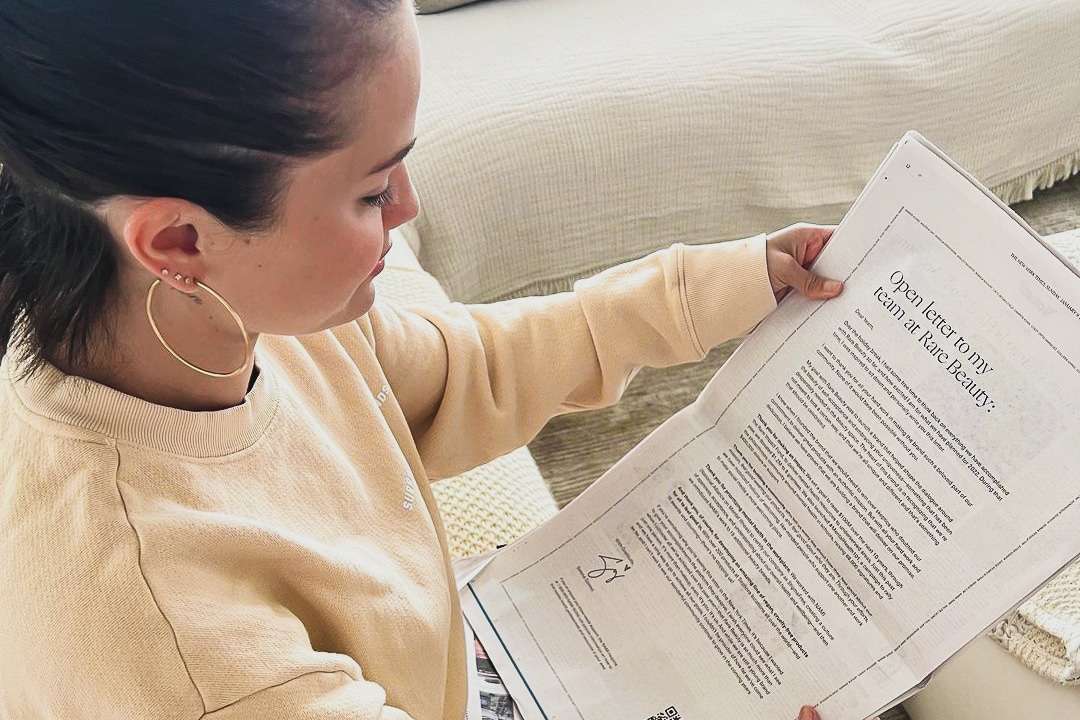
Selena Gomez penned a letter in the New York Times to her Rare Beauty team as they prioritized reducing stigmas around mental health and beauty standards since launching in 2020.

“I want to thank you for all your hard work in making the brand such a beloved part of our community. None of it would have been possible without you,” Gomez, 29, wrote in a full-page letter published in the Sunday New York Times to her Rare Beauty team.

The Revelación singer says she was inspired over the holidays to praise her team for making an impact and building community, as well “prioritizing mental health in the workplace” and “developing an amazing line of vegan, cruelty-free products for all to feel good in.”

Gomez has long been vocal about her own personal struggles with mental health issues, which she says were exacerbated by her obsession with social media, particularly Instagram.

Through Rare Beauty, Gomes says she’s aimed to help reposition the beauty dialogue, particularly around self acceptance and “embracing your uniqueness,” she wrote, calling it something that has been “desperately needed in the beauty space.” The brand now boasts more than 200 products sold in Sephora stores across the globe.

“The heart of this brand is in recognizing that we’re not meant to look a certain way, and that we’re all unique and different and that’s something that should be celebrated,” Gomez wrote.

Despite the comprehensive range of products in the Rare Beauty line, Gomez went makeup-free in a video with a copy of the letter in the Times. It’s part of her own personal journey to reduce dependence on social platforms and the beauty standards they promote.

“I knew when I founded the brand that we would need to win over skeptics who doubted our commitment to deliver great products with an authentic mission,” Gomez said. “But with all your hard work and dedication, I believe we have proven that we are building a brand that will deliver on our promise.”

Gomez launched Rare Beauty in 2020, joining a growing roster of celebrities in the vegan beauty space. The brand has been led by its mission to provide mental health resources to underserved communities, a service provided by the Rare Impact Fund. According to Gomez, sales of Rare Beauty helped the brand donate $1.2 million to eight grant recipients.

The brand also launched the #MentalHealth101 campaign which works with philanthropies to raise awareness about mental health issues in schools. It raised more than $400,000 to date.

Wondermind

Last year, Gomez launched Wondermind along with her mother, Mandy Teefey, and Daniella Pierson. The platform aims to be a hub for supporting mental health. Gomez was diagnosed with bipolar disorder in 2020. Her mother struggles with ADHD.

“I want there to be a place of people coming together and understanding that they’re not alone,” Gomez said in a promotional video about the platform.

Covid lockdown was part of the reason for the launch. “It’s not easy for anyone to be walking through what we’re walking through. It’s not normal, and it’s affecting people, specifically with mental health, and people who could have never thought about things they’re thinking about now. And it’s really confusing,” Gomez said during a 2020 press event.
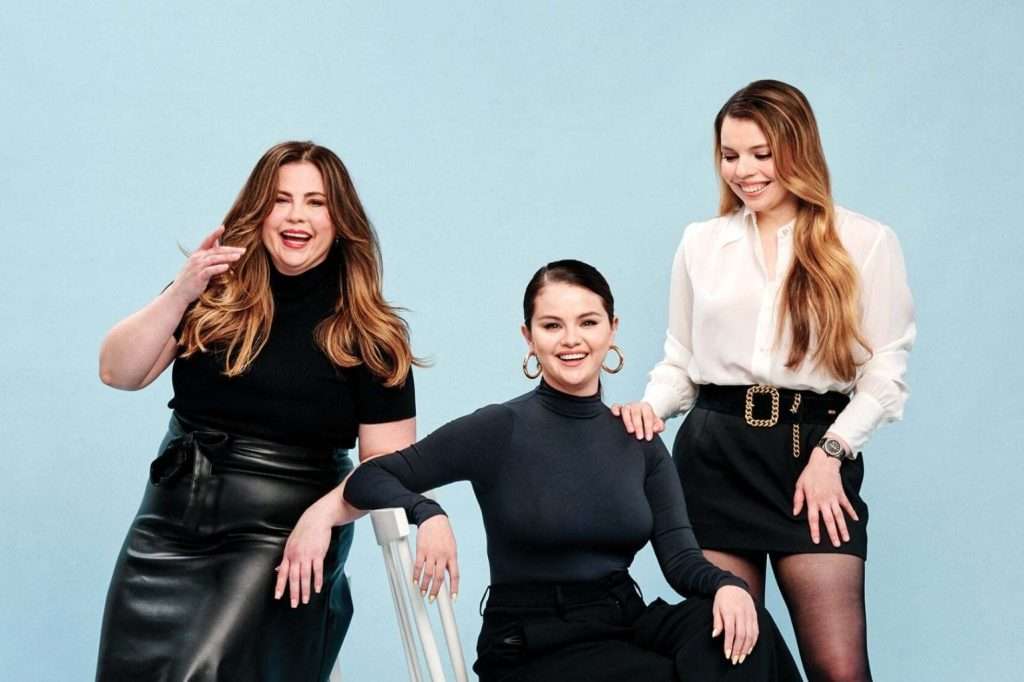
Image courtesy Wondermind

“Being vulnerable and seeking help is one of the most terrifying things in the world,” Gomez said. “It requires much courage and bravery.”

Content on the Wondermind site will include journaling exercises, public discussions, and a podcast covering mental health issues.

Rare Beauty will continue to support mental health causes. And Gomez says the work that’s been done by the Rare Beauty team is no small feat, especially during the pandemic.

“If you’re wondering why you’re seeing this letter in the New York Times, it’s because I wanted to give your accomplishments the platform they deserve,” she wrote.

Related

How The Ordinary Stacks Up to Higher-Priced Luxury Skincare

The Ordinary has reshaped everyday skincare through ingredient transparency, accessible pricing, and routine-ready formulas. Here’s how the brand’s core products work, how they compare to higher-end alternatives, and where they fit in an evidence-based daily regimen.

How to Take the Best Bath: Clean Soaking Products That Bring Big Benefits

Boost your bath season with clean bath products — from mineral salts and oils to foams and soaks. Plus, how to choose the right add-in based on what you actually need.

2026’s Best Luxury Psychedelic Wellness Retreats

Psychedelics like psilocybin and ayahuasca have been shown to improve mental health and wellness. Often ceremonial, a retreat center can bring the best in much-needed rest and rejuvenation, too.

Guerlain Partners With LVMH-Backed Circular Design Platform, Nona Source

Guerlain’s Spring 2026 Blooming Denim collection applies circular fashion sourcing to beauty packaging through a collaboration with LVMH's Nona Source.

How L’Oréal Is Testing Sustainable Innovation at Scale

L’Oréal has revealed the first cohort for L’AcceleratOR, its €100 million sustainable innovation program, selecting 13 companies focused on packaging, ingredients, circular systems, and emissions data. The group was chosen from nearly 1,000 applicants and represents the first pilot phase of the five-year initiative, which is designed to identify, test, and potentially scale sustainability-focused technologies across the company’s global operations and the wider beauty industry. https://www.loreal.com/en/press-release/sustainable-development/-l-oreal-announces-the-first-13-change-makers-chosen-to-join-its-eur-100-million-sustainable-innovation-l-accelerator-program/ Launched in 2024, L’AcceleratOR was created to move beyond concept-stage innovation and toward commercial deployment, with a particular emphasis on solutions that can be piloted within existing industrial systems. The program is operated in partnership with the University of Cambridge Institute for Sustainability Leadership, which is overseeing a structured support phase centered on pilot readiness and business integration. https://www.cisl.cam.ac.uk/ Rather than narrowing its scope to a single sustainability challenge, L’Oréal has positioned the accelerator around a broad set of operational priorities, including low-carbon materials and energy, nature-sourced ingredients, water resilience, the reduction of fossil-based plastics, circular manufacturing processes, and inclusive business models. The composition of the first cohort reflects that approach, with selected companies spanning physical materials, chemical inputs, waste transformation, and digital infrastructure. https://www.esgtoday.com/loreal-backs-13-climate-nature-and-circularity-solutions-startups/ Packaging, Materials, and the Push Away From Fossil Inputs Several of the selected companies focus on rethinking packaging formats that remain deeply embedded in beauty supply chains. United Kingdom-based Pulpex is developing recyclable paper bottles intended to replace rigid plastic packaging, while Japan’s Bioworks produces bioplastics derived from sugarcane and other plant-based feedstocks. Sweden’s Blue Ocean Closures and PULPAC are advancing fiber-based packaging systems designed to reduce both material complexity and carbon intensity, and Estonia’s RAIKU transforms natural wood into protective packaging alternatives traditionally made from petroleum-based foams. https://esgpost.com/loreal-selects-first-13-start-ups-for-laccelerator-sustainability-programme/ Ingredients and formulation inputs are also central to the cohort. France-based Biosynthis focuses on renewable and biodegradable raw materials, while U.S. company P2 Science applies green chemistry principles to develop bio-sourced fragrance and ingredient components. Another U.S. firm, Oberon Fuels, converts wood and pulp waste into renewable dimethyl ether suitable for aerosol formulations, addressing a category that has historically relied on fossil-derived propellants. https://esgpost.com/loreal-selects-first-13-start-ups-for-laccelerator-sustainability-programme/ Circular Systems and Measuring What Matters Circularity solutions appear throughout the cohort, including Belgium’s Novobiom, which uses fungi to break down complex waste streams into higher-value materials, and France’s REPLACE, which has developed a single-step process to convert multi-layer waste into new durable products. From Brazil, Gàs Verde contributes biomethane production technology aimed at reducing fossil fuel use in industrial energy and transport. https://esgpost.com/loreal-selects-first-13-start-ups-for-laccelerator-sustainability-programme/ The only data intelligence company selected, United Kingdom-based Neutreeno, focuses on supply-chain emissions measurement and reduction, reflecting the growing role of digital infrastructure in meeting climate targets and regulatory expectations. https://www.esgtoday.com/loreal-backs-13-climate-nature-and-circularity-solutions-startups/ The thirteen companies will now enter a CISL-led support phase focused on pilot readiness, with opportunities to run six- to nine-month pilots and, if successful, scale solutions across L’Oréal’s operations. Ezgi Barcenas, Chief Corporate Responsibility Officer at L’Oréal, described the approach as intentionally collaborative, saying, “To accelerate sustainable solutions to market, we are being even more intentional and inclusive in our pursuit of partnerships through L’AcceleratOR. We are really energized to be co-designing the future of beauty with CISL and these 13 change-makers.” https://www.esgtoday.com/loreal-backs-13-climate-nature-and-circularity-solutions-startups/ L’AcceleratOR sits within the company’s broader ten-year sustainability strategy, which includes goals to reach one hundred percent renewable energy, source at least ninety percent bio-based materials in formulas and packaging, reduce virgin plastic use by fifty percent, and significantly cut Scope One, Scope Two, and selected Scope Three emissions by 2030. https://www.loreal.com/en/commitments-and-responsibilities/