


Stella McCartney has joined forces with Radiant Matter on the first garment made using Biosequins — plastic-free, biodegradable and non-toxic sequins.
Model Cara Delevingne wears the Biosequins-covered jumpsuit on the April cover of Vogue photographed by Annie Leibovitz.
“I am amazed by the iridescent beauty of our BioSequin all-in-one – handcrafted in my London atelier from plant-derived, non-toxic sequins that are even more stunning than conventional options,” McCartney said in a statement.
The biodegradable sequins are made from plant-derived cellulose and contain no metals, minerals, or synthetic pigments or colors.
McCartney designed a cotton base for the Biosequined jumpsuit to let the sequins work their magic. “Who says sustainability can’t be sexy?” she said. “Cara is breath-taking in this rare, precious garment and I am so grateful that Vogue has given us the platform to share it and inspire others to see the potential of a more conscious future of fashion.”
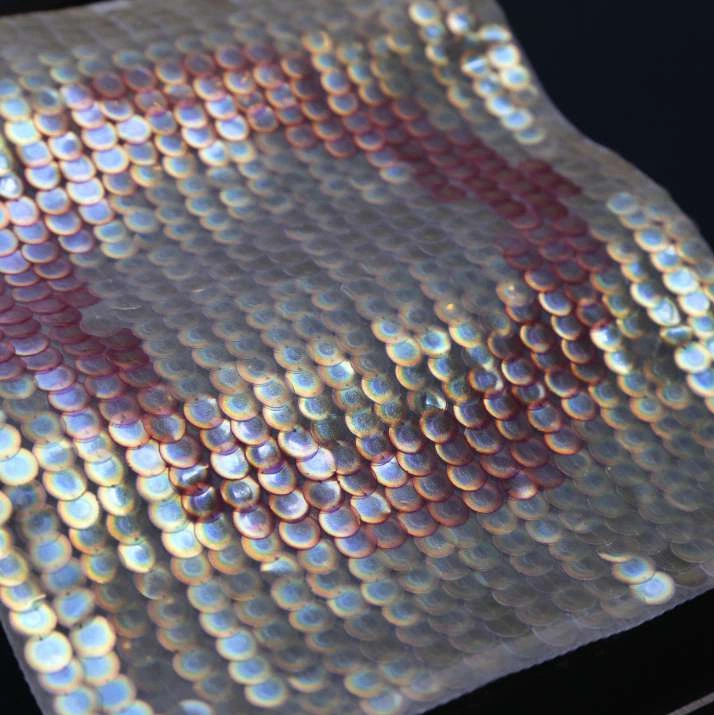
“It is so special to see how Stella McCartney has worked with our Biosequins to bring them to life on this beautiful jumpsuit,” said Elissa Brunato, Radiant Matter founder. “We have loved her uncompromising approach to sustainability and aesthetics, which are reflected in any decision, down to the fabric and thread choice, resulting in a stunning yet fully plant-derived garment.”
Conventional sequins
Conventional sequins are made from polyester film such as Mylar or PVC, which contain harmful chemicals including phthalates and hormone disruptors that have been linked to cancer. They also pose dangers to wildlife, particularly marine animals; 35 percent of microplastics released into the oceans are from synthetic clothing.
“Because sequins are synthetic and made out of a material that almost certainly contains toxic chemicals, wherever they end up – air, water, soil – is potentially dangerous,” Jane Patton, campaigns manager for plastics and petrochemicals with the Centre for International Environmental Law, told the BBC.
“Microplastics are a pervasive, monumental problem. Because they’re so small and move so easily, they’re impossible to just clean up or contain,” Patton said.
Sequins are made by being punched out of plastic sheets, which creates an additional wastestream.
“A few years ago, some companies tried to burn the waste in their incinerators,” Jignesh Jagani, a textile factory owner in the Indian state of Gujarat, told the BBC.
“And that produced toxic smoke, and the state’s pollution control board came to know of it and made the companies stop doing that. Handling such waste is indeed a challenge.”
Yet despite the risks, sequins are more popular than ever. According to a study by Oxfam, British women purchase 33 million sequin-covered garments every holiday season. More than 1.7 million end up in landfills after approximately five wears.
Biosequins
“They’re petroleum based and have dyes and chemicals and added metals to create the sparkle,” Brunato told Vogue. “We’re creating a sequin that’s a much more simplified material and can have this natural sparkle.”
Brunato says Radiant Matter takes inspiration from the way that nature creates sparkle. “A lot of what we do is look at peacock feathers and beetles’ wings and butterflies,” Brunato told Vogue. “They have this beautiful iridescence. There are no metal coatings on their wings. We look at the way nature does it.”
Radiant Matter’s Biosequins deliver that sparkle but rely on cellulose from wood pulp instead of plastic. “Cellulose is a really recurring material that can reoccur much faster than, say, petroleum,” Brunato says.
The Biosequins are Radiant Matter’s first product, but Brunato says the possibilities are endless.

“When you look at the sparkle that’s currently in the industry now, that comes in all different forms — in plastic beads, twisted into fibers,” Brunato says. “We hope to be able to address all of that and create a new benchmark for sparkle.”
The Biosequins jumpsuit comes as retailer H&M launches a new collection featuring sequins made from recycled plastic. The recycled polyester minidresses feature sequins made from recycled PET plastic bottles as well as rhinestones and beads made from recycled plastic display shelves and boxes.
“We wanted to focus on the progress H&M has made with recycled-content embellishments,” Ann-Sofie Johansson, creative advisor at H&M, said in a statement. “It’s always important to take a long-term perspective when it comes to sustainability, while at the same time agitating for change.”
Related on Ethos:
