

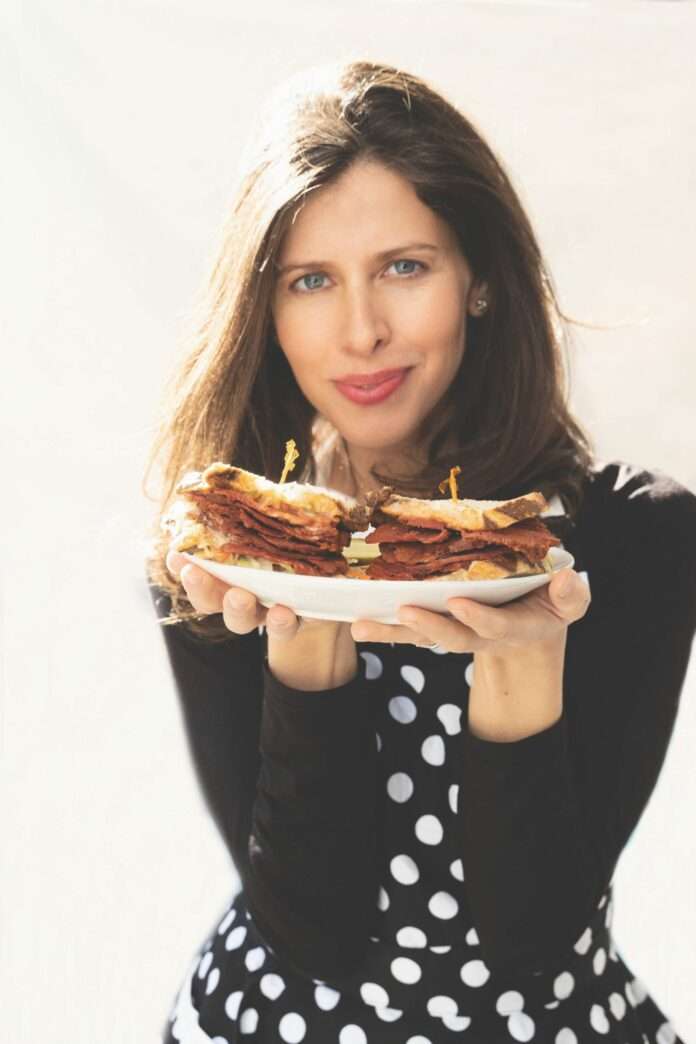
Meat-free meat isn’t new. But meat-free butchers and delis are a recent trend that’s taken off across the globe. Leading the pack: the Mark Cuban-backed Unreal Deli. And if anyone can break the planet’s meat habit, it may just be its founder, Jenny Goldfarb.
One might say that a deli that doesn’t sell meat isn’t a deli. But for Goldfarb, who comes from a family of New York City deli owners dating back more than a century, it’s just semantics: she serves up plenty of meat. Meaty meat. Butcher-quality deli meat. It just comes from plants.
“Growing up in my great-grandfather’s New York delis surrounded by all those authentic flavors gave me a refined palette, so I knew we couldn’t settle for anything less than deli-cious,” Goldfarb told Ethos via email. “As a mom, it’s important to me to feed my kids, and myself, not only delicious but also nutritious foods so the premium ingredients are also a huge factor.”
Goldfarb launched Unreal Deli in 2019, getting the ultimate boost for a young business: a Shark Tank appearance and $250,000 in funding from Shark Mark Cuban, who’s still an investor four years later.
There have been challenges, Goldfarb says. Being a latecomer to the vegan meat category has its pros, like nabbing the Shark Tank deal. But it also has its cons. “When I was on Shark Tank, Mr. Wonderful [Kevin O’Leary] asked me why the other plant-based meat companies wouldn’t crush me like a ‘corned beef cockroach’,” Goldfarb says.
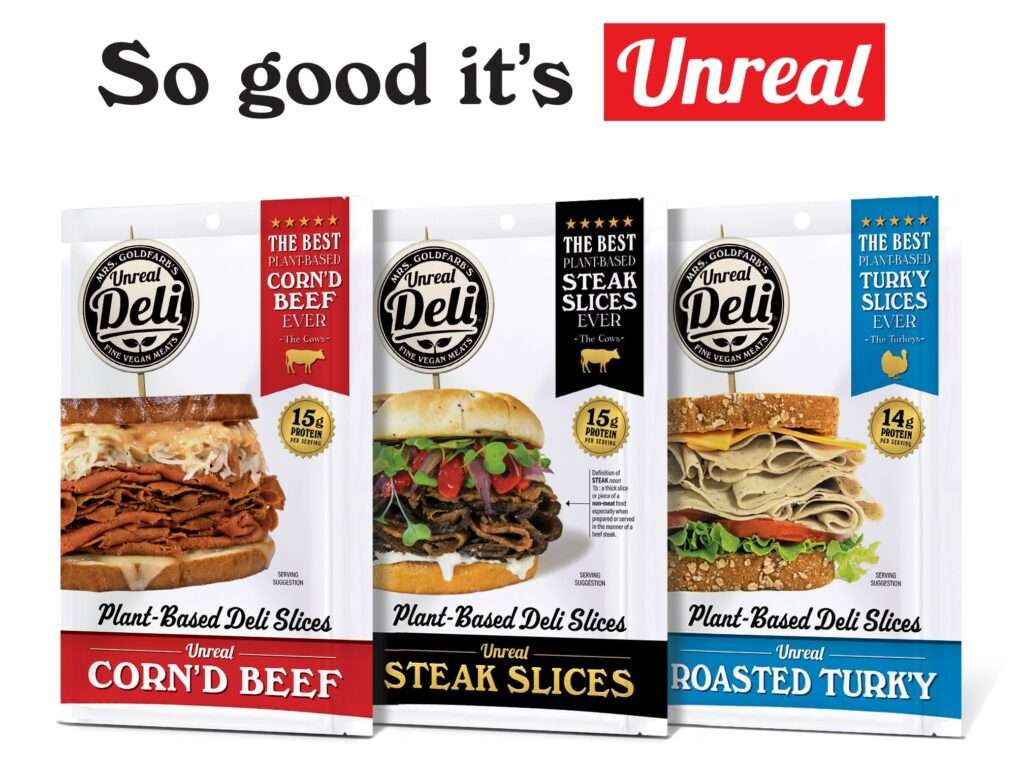
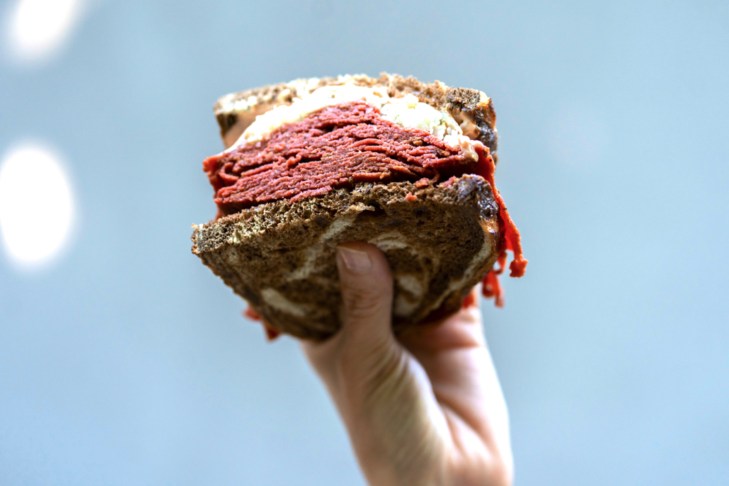
Avoiding the crushing O’Leary predicted may be due in part to having a backer like Cuban. But there’s also the fact that Goldfarb was the first in the space to tackle what’s perhaps the most deli-meat of all deli meats: corned beef. She mastered the flaky and cured taste and texture of the deli classic, presumably by calling in the skills of her deli ancestors. The company now also offers turkey and steak slices.
“I like to think that great-grandpa Morris is smiling to see how we’re bringing that authentic New York deli flavor into the modern age, making this classic part of American food history relevant to the next generation,” Goldfarb says.
Goldfarb started out making the deli meat in her kitchen for her family (she and husband Eric have three daughters). Translating those recipes at scale comes with unique challenges, though. “Creating the local deli slicer feel while mass producing is something we really had to get creative with,” she says. “We’ve always had the goal to avoid that circular look and plastic feel of cheap, processed lunch meats, but rather have that real, authentic horizontal artisan deli slice.”
The market for meat-free
Unreal Deli isn’t the first plant-based meat company to sell deli-style slices; Tofurky has offered slices for years. So has Lightlife, Yves, and Field Roast, among others. And while Beyond Meat and Impossible Foods have taken up the lion’s share of media attention and fast-food placement, artisan meats (and cheese) are one of the category’s hottest trends.
O’Leary’s ‘cockroach’ comment, it seems, was in haste — it is, perhaps, because he overlooked the power of nuance: Goldfarb’s Unreal Deli offers the growing category another entry point. And for nascent categories, that’s crucial, particularly when the majority of consumers are coming to plant-based food for significant reasons, chiefly their health and the health of the planet.
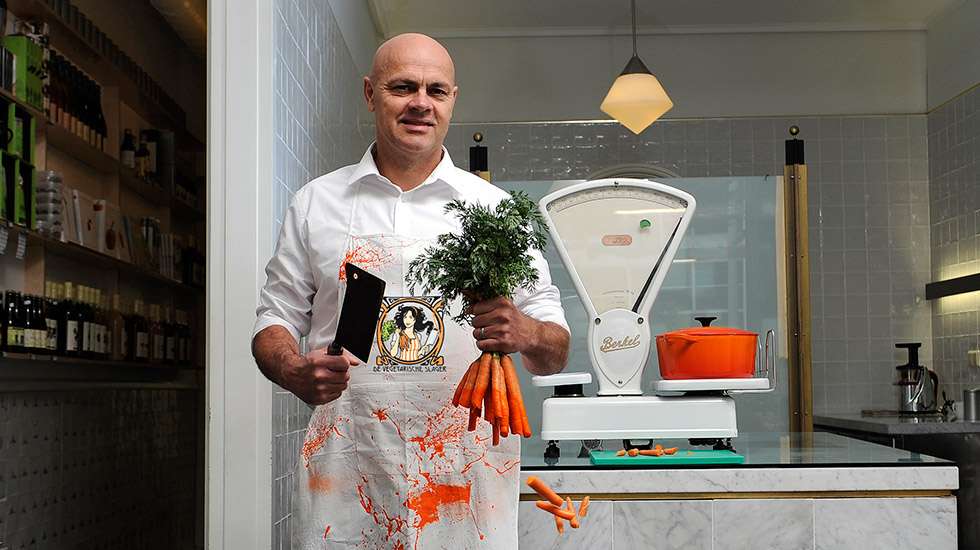
The now Unilever-owned Dutch vegan meat brand The Vegetarian Butcher is, far and away, the category’s biggest success story. The outspoken founder Jaap Korteweg said his work in animal agriculture led him to eschew animal products and start his own plant butchering. It was after being asked to store pig cadavers from a swine flu outbreak that he shifted away from meat. “For me, that was the moment to stop it, I’d had enough of that system using animals for meat,” he told Barron’s.
“My goal was to become the biggest butcher in the world as soon as possible, and at that time people laughed at it because they don’t take it seriously,” Korteweg said. “I took it [seriously] because I wanted to create an alternative for the industrial meat.” The company is now one of the fastest-growing vegan meat brands in Europe.
The trend is picking up steam elsewhere, too. The U.K. recently got its first vegan butcher shop, Rudy’s. “People understand what it is that we’re selling,” co-founder Matthew Foster told Reuters. “It’s all designed to emulate meat. It tastes like meat, it’s got meat-like texture.”
Minnesota-based The Herbivorous Butcher led the meat-free butcher revolution in the states and continues to attract new customers primarily through its ship-to-your-door national service.
“We’re here to bridge the gap so that omnivores can switch over,” Aubry Walch, Herbivorous Butcher co-founder, told the Guardian. “We don’t use funny words for our products. We call them what they are.”
Los Angeles recently got its first vegan butcher shop, Maciel’s, located in the trendy east-side Highland Park neighborhood. “We see it as a neighborhood butcher-deli,” co-founder Joe Egender told Eater. “You come and get your weekly meats, but also grab some sandwiches and aguas frescas, and hang out a little bit or take it home. We see moms and dads buying slices of turkey for their kids to make school lunches.”
And there are others like Unreal, bringing premium products to retailers. One needs only step inside Erewhon, the Los Angeles supermarket chain that specializes in high-end products, for a glimpse. It offers items like Hellenic Farm’s fig salami, tempeh handmade in San Diego, and selections from Canada’s Very Good Butchers (VGB).
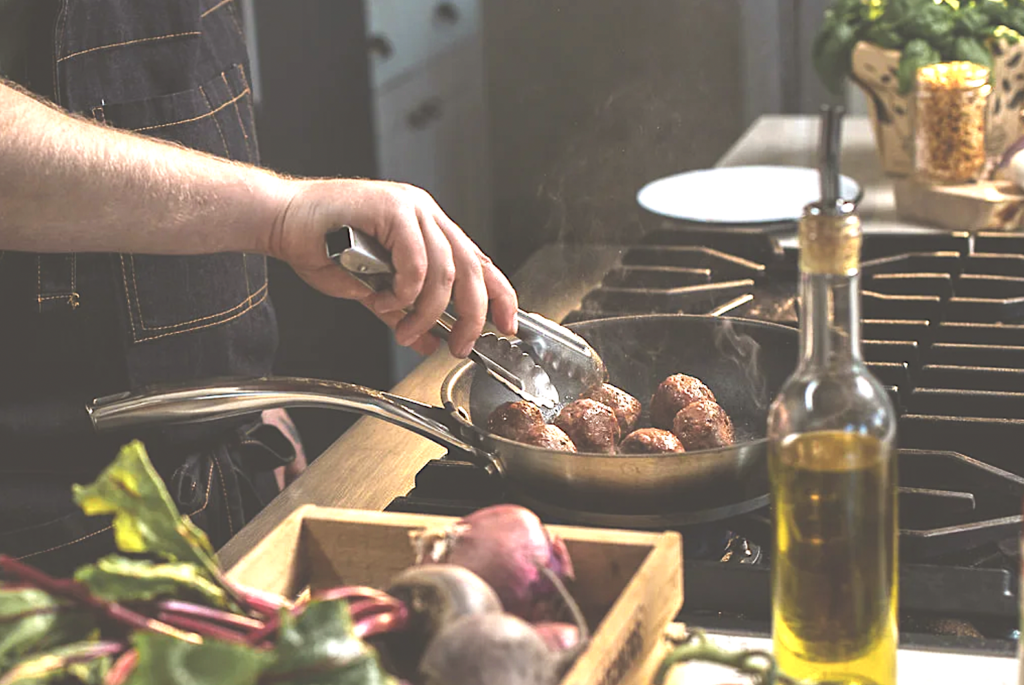
“The idea from the start was to create these high-quality meat alternatives out of real whole food ingredients. And we have the kind of selection that you might expect to see in butcher shops,” VGB co-founder Mitchell Scott told Ethos.
Scott says there’s also value in being the “little guys” riding the coattails of Beyond and Impossible. “In a way, they’re part of our marketing team,” he says.
“They’re running Superbowl ads, and they’re trying to get as many people as possible to try a plant-based burger. And I think that’s the big thing — a lot of people have this preconceived notion that plant-based food isn’t great, or, maybe, over the past 20 years, they’ve had a couple of dodgy veggie burgers. So what [Beyond and Impossible] are doing is they’re getting people to try their products. And all of a sudden, people are going, ‘Wow, you know, plant-based food tastes good. I’m going to try more of this.’ And they’re growing the category,” Scott says.
“As more people start to eat plant-based, they’re going to take a closer look at the products. They’re going to shop around,” he says.
‘Meating’ the demand
Demand is booming, even despite recent lackluster sales performances in the U.S. for some of the industry leaders; both Beyond and Impossible have laid-off staff in the last year.
But growth and demand are continuing — it’s the famous “S” curve, experts insist. And it’s being driven by the ever-growing flexitarian consumer, especially in the U.S. Those are consumers seeking, for the most part, meaty-tasting vegan meat.
According to Grand View Research, the vegan meat category brought in $6.023 billion last year and should surpass $24 billion by 2030. For Goldfarb, there’s no question Unreal Deli will be part of that. Following a Series A funding round last year led by Cuban and the Getty family, Unreal now has a $50 million valuation.
“We’re just getting started,” Goldfarb says. Unreal has seen very real growth in recent years, with sales surpassing $4 million and placement in thousands of stores across the U.S. “Numbers don’t lie, more and more consumers, mostly those who still eat animal-based meats, are trying out plant-based and looking to cut down on their environmental impact and improve their health with these options,” she says. “According to Packaged Facts, 47 percent of those not yet consuming plant-based meats are interested in trying them.”
To that growth, Goldfarb says the company is in the final stages of adding a “very exciting” new product that should be launching later this year. She calls it “a total game-changer.”
And, she says, along with the brand’s recent expansion into all 400 Sprouts locations nationwide, there are some even bigger launches coming this year that will nearly double Unreal’s retail footprint. Goldfarb says there will be announcements in food service, too, as well as moving into the international market.
But despite all the growth and busyness of running a business, Goldfarb is, first and foremost, a mother. And her daughters continue to be her motivation. “I want to leave them a kinder, healthier, and more compassionate world,” she says. “And the animals; this is bigger than just us.”
Related on Ethos:
Want an even greener footprint? Check out our guide to sustainable kitchen essentials.
