
Sunday, January 18, 2026

The Wine-Making Capital of the World Takes the Lead on Sustainability

Share

Tradition has kept French winemaking the same for hundreds of years. Then, the climate changed everything.

Long the proverbial wine snob of the planet, France, the world’s leading wine producer, is now also at the forefront of a wine movement changing perceptions and breaking barriers. According to France’s National Wine Sector, approximately half of all its wine producers will achieve sustainability standards or organic certification by 2025. France produces about 16 percent of the world’s wine, making it a $9 billion-a-year business.

France’s wine industry is also big business for the country’s tourism sector. Pre-pandemic, wine-producing regions across the country welcomed more than 24 million tourists every year.

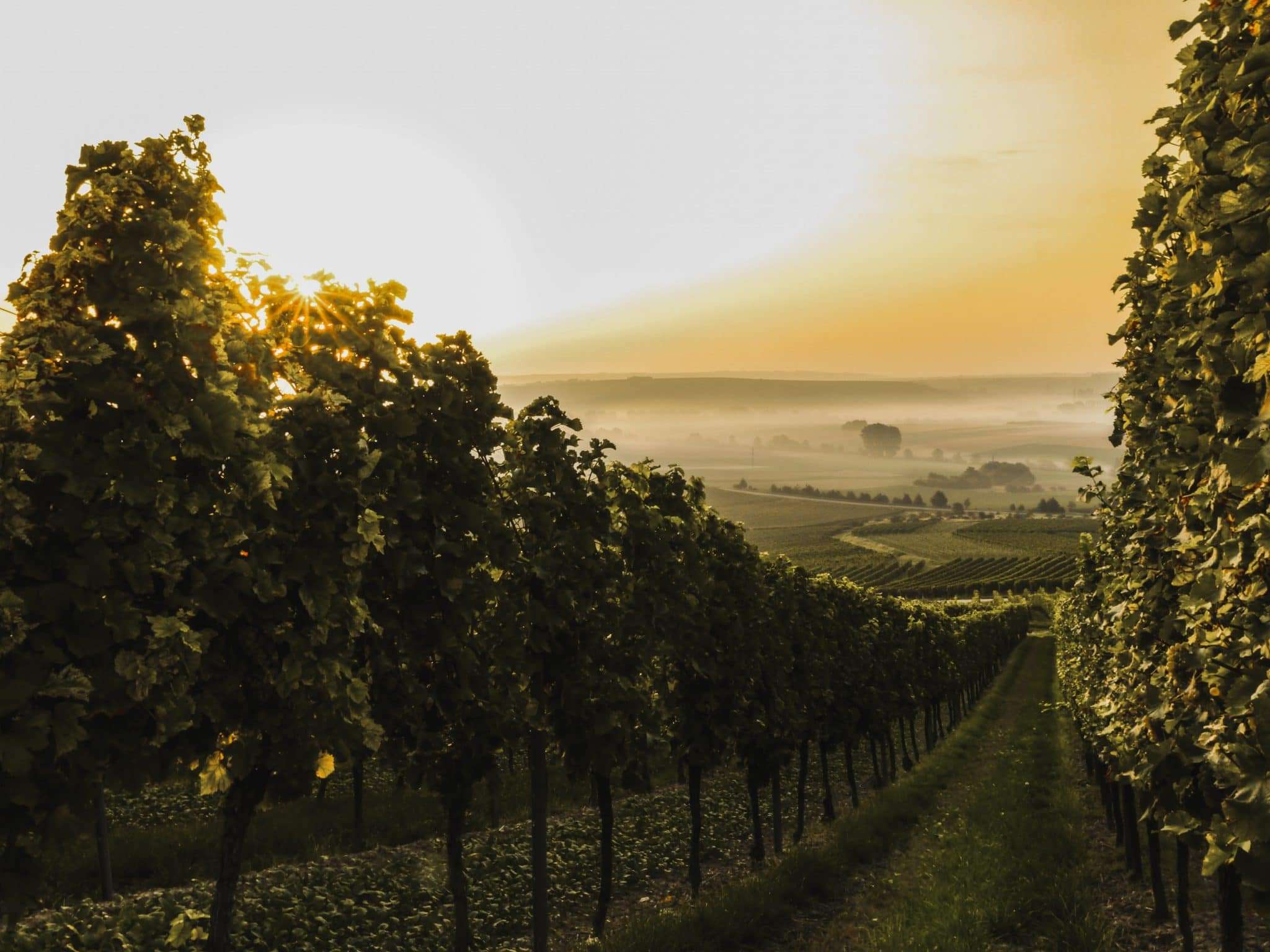
Vineyard.
Photo courtesy Sven Wilhelm

“Part of what makes French wine so incredible — beyond taste — is the country’s wine history and its reverence of that history,” Mike Pomranz wrote for Food & Wine. “For instance, in Bordeaux, the Wine Classification of 1855 still holds weight over 150 years later.”

But recently, the region has been looking to the past in an attempt to create an environmentally-friendly future,” Pomranz says, moving away from things like pesticides and toward more sustainable practices in the hope that “one of the world’s best-known wine designations can continue to bear fruit for generations to come.”

Sustainable wine production in France

This momentum has turned France toward new traditions, rewriting the hundreds of years of winemaking history. By next year, 100 percent of winemakers in Bordeaux, France — the wine-producing capital of the world — will be certified organic, biodynamic, sustainable, or well on their way to transitioning.

Just a decade ago, Bordeaux winemakers were heavily reliant on herbicides and pesticides; 30 percent of substances were considered harmful. That number has dropped to ten percent. In that same time frame, membership of the Environment Management System grew from 25 vineyards to more than 800. In the Loire Valley, it’s a similar situation: vineyards there are aiming to achieve the same by 2030.

Avaline wine.
Courtesy Avaline

In 2021, the Comité Champagne committed to cut chemical use by 50 percent, reduce the carbon footprint of its bottles by 15 percent, and achieve 100 percent sustainability in its viticulture. The shift has been embraced and championed by brands including Avaline, the U.S.-based wine company co-founded by actress Cameron Diaz and entrepreneur Katherine Power. The winemakers partnered with EthicDrinks, a Bordeaux-based sustainable wine producer that took a 2021 French government award for most sustainable wine packaging

French wine and climate change

If France held onto grape-growing and winemaking practices in the name of tradition, the impact of climate change has imparted an urgency to reevaluate. Warming temperatures are changing the flavor of some wines by causing grapes to ripen faster, increasing their sugar content. Winemakers in Bordeaux have noticed changes to grape profiles since as far back as the 1980s when harvest began occurring earlier and earlier.

A 2019 study found that Merlot will be the first wine grape to show the impact of climate change. It currently makes up 60 percent of the vineyards in Bordeaux.

“The flavor of French wines will be more alcoholic, less acidic and less aromatic,” Agnès Destrac-Irvine, of the VitAdapt program that experiments with new grape varieties under climate change, told Time. “The question isn’t how will climate change change French wines, the question is how has it already?”

Wine in a glass outside.
Photo courtesy Marcel Gross

But elsewhere in the country, warmer temperatures have, at least temporarily, brought benefits. For Alsace and Champagne, mildew has decreased as a result of droughts that have occurred since 2017. That’s not likely to last though as temperatures are expected to continue to rise if Paris Agreement temperature targets aren’t met.

“Some wines will not be able to remain,” Jean-Marc Touzard, the director of l’INRA, a French public research institute focussed on agriculture, told Time. “Merlot is struggling in the face of climate change.”

Wine and spirits leader Moët Hennessy announced a €20 million research center in 2021. Based in Mont Aigu, it will focus on sustainability through four key areas of research including microbiology and biotechnology; climate change research; optimizing production efforts to improve winemaking and recyclability across the supply chain; and efforts to continue to improve on quality and excellence of its products.

Grapes 2.0

In Bordeaux, scientists are now hard at work looking at new grape varietals and flavors more adaptable to climate change. They’re looking at hardier grapes from other parts of the world that may work like Merlot.

But France has long restricted grape varietals. The Institut National des Appellations d’Origine (National Wine Authority) oversees which grapes can and can’t be grown for wine production. The agency has recently relaxed restrictions on several varieties once not allowed in order to find suitable grapes for a changing climate.

Vineyard.
Photo courtesy Daniel Salgado

Finding suitable grape varieties is only one part of the climate change problem. Weather patterns are changing across the globe, and could bring unprecedented shifts to growing and harvesting.

“It’s not just about warmer temperatures. With climate change, there will be risks of frost, droughts, fires,” Touzard says. “Look at the fires in California and Australia. We don’t want the taste of fumes in our wines.”

President of the Bordeaux Wine Council, Allan Sichel, says the shift to more sustainable and organic farming not only helps reduce the industry’s impact on climate change but develops healthier relationships with the soil, the environment, which may make adapting to the changing climate easier.

As a record number of wine growers embrace the country’s shift to more sustainable production, it shows “a total change in the state of mind,” he says.

“We can’t make things compulsory but we can make it easier.”

Related on Ethos:

Related

How to Take the Best Bath: Clean Soaking Products That Bring Big Benefits

Boost your bath season with clean bath products — from mineral salts and oils to foams and soaks. Plus, how to choose the right add-in based on what you actually need.

2026’s Best Luxury Psychedelic Wellness Retreats

Psychedelics like psilocybin and ayahuasca have been shown to improve mental health and wellness. Often ceremonial, a retreat center can bring the best in much-needed rest and rejuvenation, too.

How Wildflower Loss Shaped Stella McCartney’s SS26 Collection

Stella McCartney’s SS26 collection references Britain’s disappearing wildflower meadows through hand-embroidered tailoring, continuing the label’s long-standing practice of embedding environmental themes into design and materials.

How L’Oréal Is Testing Sustainable Innovation at Scale

L’Oréal has revealed the first cohort for L’AcceleratOR, its €100 million sustainable innovation program, selecting 13 companies focused on packaging, ingredients, circular systems, and emissions data. The group was chosen from nearly 1,000 applicants and represents the first pilot phase of the five-year initiative, which is designed to identify, test, and potentially scale sustainability-focused technologies across the company’s global operations and the wider beauty industry. https://www.loreal.com/en/press-release/sustainable-development/-l-oreal-announces-the-first-13-change-makers-chosen-to-join-its-eur-100-million-sustainable-innovation-l-accelerator-program/ Launched in 2024, L’AcceleratOR was created to move beyond concept-stage innovation and toward commercial deployment, with a particular emphasis on solutions that can be piloted within existing industrial systems. The program is operated in partnership with the University of Cambridge Institute for Sustainability Leadership, which is overseeing a structured support phase centered on pilot readiness and business integration. https://www.cisl.cam.ac.uk/ Rather than narrowing its scope to a single sustainability challenge, L’Oréal has positioned the accelerator around a broad set of operational priorities, including low-carbon materials and energy, nature-sourced ingredients, water resilience, the reduction of fossil-based plastics, circular manufacturing processes, and inclusive business models. The composition of the first cohort reflects that approach, with selected companies spanning physical materials, chemical inputs, waste transformation, and digital infrastructure. https://www.esgtoday.com/loreal-backs-13-climate-nature-and-circularity-solutions-startups/ Packaging, Materials, and the Push Away From Fossil Inputs Several of the selected companies focus on rethinking packaging formats that remain deeply embedded in beauty supply chains. United Kingdom-based Pulpex is developing recyclable paper bottles intended to replace rigid plastic packaging, while Japan’s Bioworks produces bioplastics derived from sugarcane and other plant-based feedstocks. Sweden’s Blue Ocean Closures and PULPAC are advancing fiber-based packaging systems designed to reduce both material complexity and carbon intensity, and Estonia’s RAIKU transforms natural wood into protective packaging alternatives traditionally made from petroleum-based foams. https://esgpost.com/loreal-selects-first-13-start-ups-for-laccelerator-sustainability-programme/ Ingredients and formulation inputs are also central to the cohort. France-based Biosynthis focuses on renewable and biodegradable raw materials, while U.S. company P2 Science applies green chemistry principles to develop bio-sourced fragrance and ingredient components. Another U.S. firm, Oberon Fuels, converts wood and pulp waste into renewable dimethyl ether suitable for aerosol formulations, addressing a category that has historically relied on fossil-derived propellants. https://esgpost.com/loreal-selects-first-13-start-ups-for-laccelerator-sustainability-programme/ Circular Systems and Measuring What Matters Circularity solutions appear throughout the cohort, including Belgium’s Novobiom, which uses fungi to break down complex waste streams into higher-value materials, and France’s REPLACE, which has developed a single-step process to convert multi-layer waste into new durable products. From Brazil, Gàs Verde contributes biomethane production technology aimed at reducing fossil fuel use in industrial energy and transport. https://esgpost.com/loreal-selects-first-13-start-ups-for-laccelerator-sustainability-programme/ The only data intelligence company selected, United Kingdom-based Neutreeno, focuses on supply-chain emissions measurement and reduction, reflecting the growing role of digital infrastructure in meeting climate targets and regulatory expectations. https://www.esgtoday.com/loreal-backs-13-climate-nature-and-circularity-solutions-startups/ The thirteen companies will now enter a CISL-led support phase focused on pilot readiness, with opportunities to run six- to nine-month pilots and, if successful, scale solutions across L’Oréal’s operations. Ezgi Barcenas, Chief Corporate Responsibility Officer at L’Oréal, described the approach as intentionally collaborative, saying, “To accelerate sustainable solutions to market, we are being even more intentional and inclusive in our pursuit of partnerships through L’AcceleratOR. We are really energized to be co-designing the future of beauty with CISL and these 13 change-makers.” https://www.esgtoday.com/loreal-backs-13-climate-nature-and-circularity-solutions-startups/ L’AcceleratOR sits within the company’s broader ten-year sustainability strategy, which includes goals to reach one hundred percent renewable energy, source at least ninety percent bio-based materials in formulas and packaging, reduce virgin plastic use by fifty percent, and significantly cut Scope One, Scope Two, and selected Scope Three emissions by 2030. https://www.loreal.com/en/commitments-and-responsibilities/

What Is Eco Brutalism? Is It the Beginning or the End of Sustainable Design?

Eco-brutalism is an architectural style gaining popularity for combining brutalist design elements with greenery to create a unique aesthetic and the perception that it is more sustainable than traditional brutalism. However, it has also faced criticism, particularly regarding its sustainability status.