


Econyl is being used across the sustainable fashion industry. But what exactly is it? And just how sustainable is it really?
The fishing industry is filling up the oceans with its trash. That’s no exaggeration. Last year, one study found that more than 75 percent of the plastic in the Great Pacific Garbage Patch — a collection of floating debris in the North Pacific Ocean twice the size of Texas — comes from fishing. The gear poses a major entanglement risk to marine life; in fact, research suggests around 300,000 whales, dolphins, and porpoises die every year from entanglement in ocean trash, chiefly fishing gear. But there are ways to mitigate the impact, and one of them is Econyl — a material made entirely of recycled waste products (including fishing nets) that functions just like nylon.
What is Econyl?
Manufactured by Aquafil, Econyl is a type of regenerated nylon. As well as fishing nets, it’s made from old carpets, industrial plastic waste, and old fabric scraps, all of which were initially made with nylon. The old waste materials are then depolymerized, which means that the material is broken down into its basic building blocks, before it is re-polymerized again into a new, recycled material.
This process not only helps to reduce the amount of waste in the oceans, but it’s also less energy and resource-intensive. The new Econyl fiber is also infinitely recyclable, which means it can be broken down and re-polymerized again and again without impacting the quality of the material.
Without a doubt, Econyl is a far more sustainable alternative to virgin nylon. The manufacturing process for the latter also releases nitrous oxide into the atmosphere — a greenhouse gas 300 times more potent than carbon dioxide. But that said, Econyl isn’t perfect. Because the material is plastic, it will still release microfibers into the oceans every time you wash it. One way to reduce this is to use a microplastic washing bag, which helps to hold back the plastic fibers from being released from the washing machine into the water supply.
Brands that use Econyl
Switching from virgin nylon to Econyl is a great choice for the planet, and luckily, plenty of brands are using the material to make more environmentally-conscious versions of their products. Here, we’ve compiled just a few of the brands making use of Econyl right now, but you can also find an extensive list here.

Adidas
Sportswear giant Adidas first partnered with Econyl back in 2014 to produce low-waste garments for its swimwear collection. And nearly ten years later, you can still buy Adidas swimsuits (like this 3-Stripes Swimsuit, for example, and this Allover Graphic Swimsuit) made with regenerated nylon yarn.

Burberry
In 2019, luxury fashion label Burberry partnered with Econyl to launch a new capsule collection. “We are proud to use the Econyl yarn in this collection because it shows how we can actively tackle a problem like plastic waste and create beautiful, luxury products at the same time,” said Pam Batty, Burberry’s VP of Corporate Responsibility. You can still buy Burberry Econyl jackets from British retailers like Harvey Nichols and Harrods.
Prada
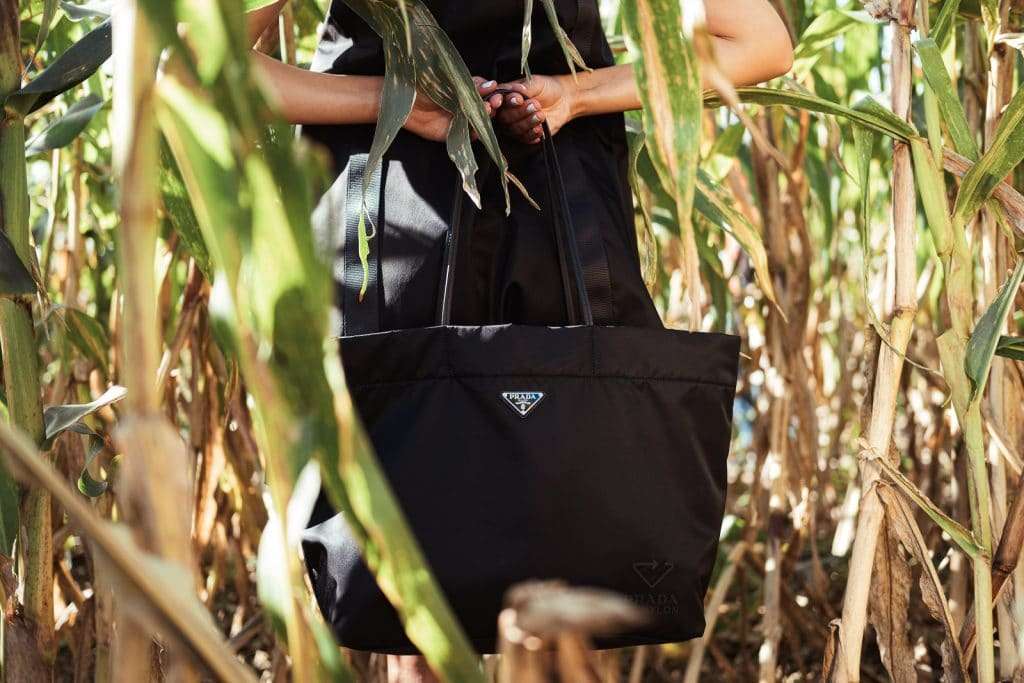
In 2019, Prada revealed a new capsule collection made with Econyl. And, the following year, it expanded the fabric into ready-to-wear, accessories, and footwear. “This collection allows us to make our contribution and create products without using new resources,” said Lorenzo Bertelli, Prada Group’s marketing director, back in 2019. Today you can shop some of the brand’s most iconic designs, like this 2005 Re-Edition bag, now made with Econyl.

Stella McCartney
Like many brands in the luxury space, Stella McCartney’s Econyl collaboration started in 2019, and has since gone from strength to strength. In 2023, the brand launched the new Close-the-Loop Parka using regenerated nylon, which, it claims, is the luxury fashion industry’s “first-ever circular garment to ‘close the loop.’” This means that Stella McCartney will take back all of the materials used to make it and recycle them into something new.

Tommy Hilfiger
In spring 2023, Tommy Hilfiger teamed up with singer Shawn Mendes to launch a new capsule collection “with sustainability in mind.” The collection, titled Tommy x Shawn Classics Reborn, saw some of the brand’s most popular garments reimagined with new sustainable materials, including Econyl.

Mara Hoffman
If you’re in the market for one of Mara Hoffman’s iconic swimsuits, you’ll be pleased to know that the brand makes all of its swimwear with Econyl. In fact, the brand has used the regenerated nylon since 2017, and in that time, has diverted more than 17,760 pounds of waste from the landfill, including more than 4440 pounds of fishing nets.
Related on Ethos:
