


When it comes to worker exploitation in the fashion industry, it seems that no corner of the Earth is safe.
From the Peruvian Andes to England’s east midlands to Cambodia’s capital, research suggests that many of the world’s biggest clothing brands — both in fast-fashion and the luxury sector — take what they can, and give very little in return.
Take the link between Cambodia’s grueling brick kiln industry and fast fashion, where offcuts from the garment factories in Phnom Penh, many of which supply some of fast fashion’s biggest names, are used as fuel in the brick industry where modern slavery and forced labor still exist.

To many, this is of no surprise; the fashion industry is notorious for exploiting workers across Southeast Asia. Alongside Cambodia, Vietnam and Myanmar are also major hubs for garment factories, and multiple reports have found that the industry in both countries is associated with human rights abuses.
And recent reports show that when it comes to producing clothes for the Western world, perhaps unsurprisingly, fashion brands will take their exploitative practices far beyond this region, too. Italian label Loro Piana, which has become the face of the “quiet luxury” trend in recent months, has been linked with the ill-treatment of Indigenous people in the mountains of Peru, for example.
The exploitation behind ‘quiet luxury’
Bloomberg recently released a report claiming that despite “thirty years of providing the world’s finest wool to the fashion house,” Loro Piana has done “almost nothing for the Indigenous people of the Peruvian Andes.” The people at the center of the claim are the Lucanas, an Indigenous community with a population of around 2,700 — most of them poor. Every year, they supply wool from the local wild population of vicuña to the fashion house, and, according to Bloomberg, receive very little compensation in return. This is despite the fact that the average Loro Piana sweater sells for around $9,000.

“There are now about 200,000 vicuñas in Peru, close to half of the world’s population,” the publication notes. “The increased supply seems to have increased demand, and Loro Piana’s prices keep rising. The rate paid to the people of Lucanas for raw fiber, however, has fallen 36 percent in the past decade.”
It then referenced one government-commissioned study from 2018, conducted at Peru’s National University of Huancavelica, which found that 80 percent of the Lucanas community had not benefited from its relationship with Loro Piana and the vicuña wool trade.
Ongoing garment worker abuses in Leicester
More than 9,700 miles away from Peru, in Leicester, a city in England’s east midlands, people are also suffering for the fashion industry. According to the Ethical Trading Initiative, one investigation uncovered system abuse in the city’s garment factories around a decade ago, but it wasn’t until the pandemic that the situation made headlines.
Reports noted that garment workers in the city — who were making clothes for fast fashion behemoth Boohoo — were earning as little as £3.50 an hour when the minimum wage in the U.K. in 2020 was £8.72. Investigators reported that one factory, which was making clothes for Nasty Gal (a fast fashion brand owned by Boohoo), had no social distancing measures in place, despite the fact that it was the height of the pandemic.
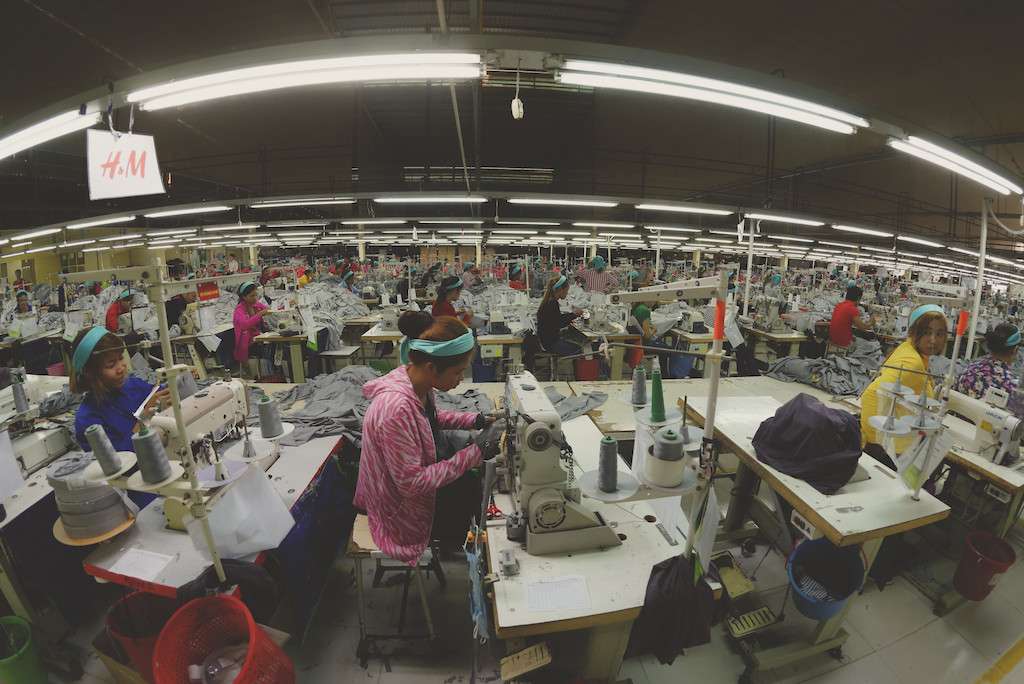
Boohoo attempted to make good of the situation by opening an improved site in Leicester in 2022, but earlier this year, a BBC investigation reported it was still not making clothes ethically. Boohoo is now considering closing the facility, although it says this decision is not due to the investigation.
Other fast fashion brands like Pretty Little Thing, Zara, and ultra-fast fashion juggernaut Shein have also been linked with exploitative practices. And this is because the fast fashion model thrives on exploitation. To make clothes quickly and sell them to consumers for cheap, costs in the supply chain have to be driven down. In the head offices of fast fashion companies, buyers consistently barter with factories around the world to cut prices.
But as the case with Loro Piana demonstrates, the luxury fashion industry is also not innocent. One recent report from KnowTheChain and The Business and Human Rights Resource Centre called out LVMH, which owns Loro Piana, as well as names like Givenchy, Louis Vuitton, and Fendi, for a lack of action over modern slavery.
As human rights activist and founding director of nonprofit Walk Free told Vogue Business last year, the unfortunate truth is that, in fashion, “exploitation is industry standard.” But it’s not all bad news. Some brands are making steps towards better practices and transparency. Find 13 examples of more trustworthy brands here.
Related on Ethos:
