

The recently released list of electric vehicles eligible for the 2024 EV tax credit reveals a notably shortened roster, reflecting stricter regulations on battery sourcing and assembly.
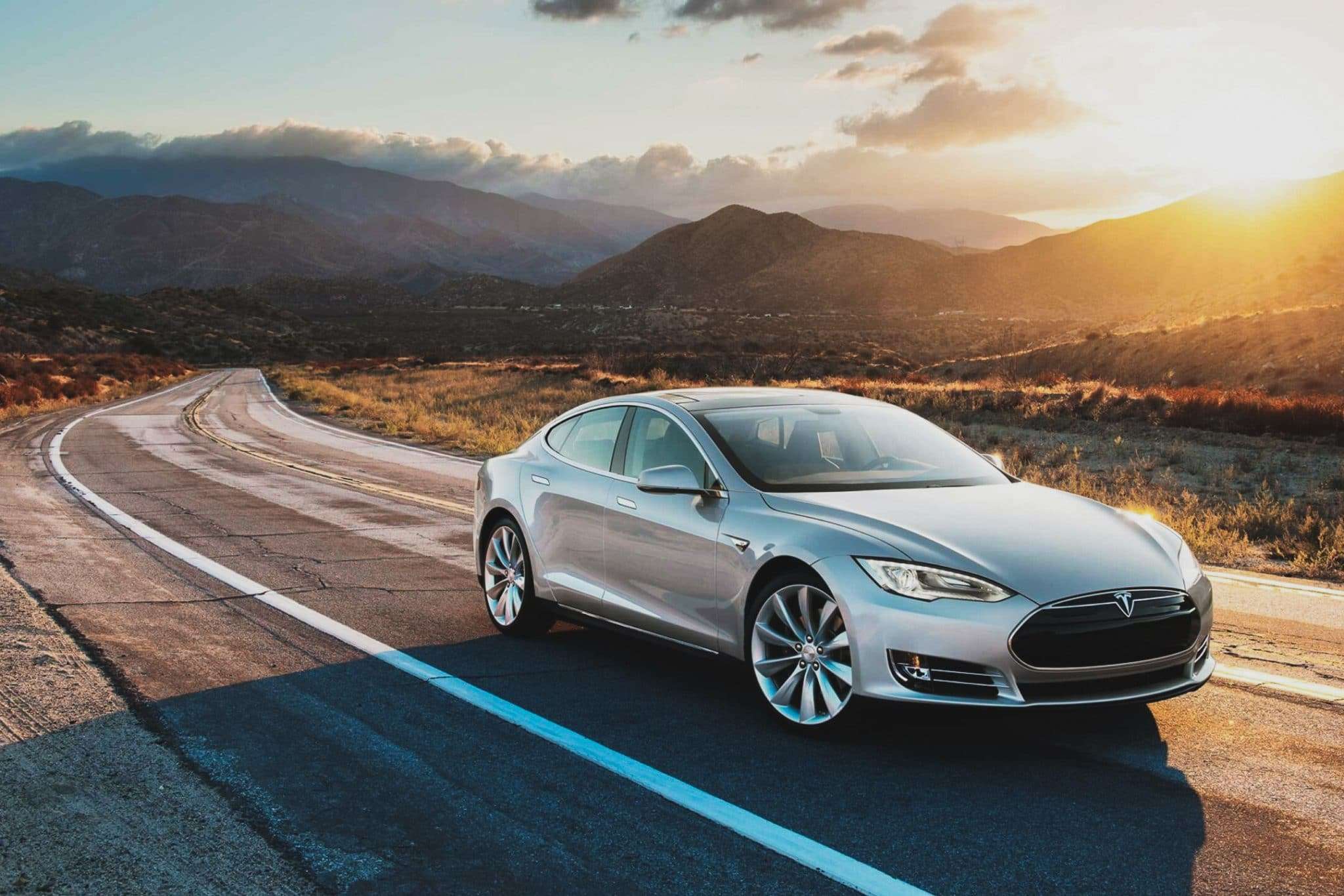
Several high-profile EV models, including most of the Tesla Model 3 range and the entire Model S lineup, no longer qualify for the $7500 tax credit. Similarly, the Chevrolet Blazer EV and Cadillac Lyriq are absent from the list. Additionally, the Ford Mustang Mach-E and Nissan Leaf are currently ineligible.
The credit available for some models, like the Rivian electric truck, has been reduced by 50 percent to $3,750; this decrease is a result of the revised stipulations under the Inflation Recovery Act of 2022, which imposes more stringent requirements for the origin of battery components and critical minerals. Starting in 2024, to qualify for half of the credit, 60 percent of a vehicle’s battery parts must be sourced from North America, an increase from the 50 percent requirement in 2023. Furthermore, at least 50 percent of the critical mineral content in batteries must be sourced from North America or countries with a free-trade agreement.
An additional factor impacting eligibility is the recent directive from the Department of Energy. As of January 1, 2024, vehicles with key battery components from “foreign entities of concern” like China, Russia, Iran, or North Korea will be disqualified from the credit. This rule also applies to automakers with a majority interest held by entities from these countries. The Biden administration’s push for a domestic EV supply chain will extend these regulations in 2025 to include mining, processing, and recycling of critical minerals.

Despite these tighter rules, a loophole remains for electric vehicle leasing. The full $7,500 federal credit still applies to leased commercial vehicles, regardless of their origin, content, or price. This means that imported luxury EVs may still receive substantial government subsidies.
Another significant change in 2024 is the transformation of the EV tax credit into an immediate dealership rebate. Buyers must verify the vehicle identification number (VIN) to ensure eligibility for the credit. This process varies by automaker, with some like General Motors introducing VIN-check tools for their dealerships. However, with less than half of franchised dealerships registered for the tax credit by the end of 2023, this aspect remains complex.
Income and price caps introduced in 2023 continue to apply. To claim the credit, buyers must have an adjusted gross income of under $300,000 for married couples filing jointly, $225,000 for head of household, or $150,000 for other filers. Additionally, vehicle price caps are set at $55,000 for new cars and $80,000 for pickup trucks, SUVs, and vans.
The eligible models for 2024 include a variety of vehicles, such as the Chevrolet Bolt EV and EUV, Chrysler Pacifica EV, and Tesla Model Y in various configurations. Some models, like the Ford Escape Plug-In Hybrid and Jeep Grand Cherokee 4xe, only qualify for a reduced $3,750 credit.
Qualifying EVs for 2024 Tax Credit
2022-2023 Chevrolet Bolt EV
2022-2023 Chevrolet Bolt EUV
2022-2024 Chrysler Pacifica EV
2022-2024 Ford Escape Plug-In Hybrid ($3,750)
2022-2024 Ford F-150 Lightning (Extended Range and Standard Range)
2022-2024 Jeep Grand Cherokee 4xe ($3,750)
2022-2024 Jeep Wrangler 4xe ($3,750)
2022-2024 Lincoln Corsair Grand Touring ($3,750)
2023-2024 Rivian R1S (Dual- and Quad-Motor, Large and Max Pack) ($3,750)
2023-2024 Rivian R1T (Dual- and Quad-Motor, Large Pack) ($3,750)
2023-2024 Tesla Model 3 Performance
2023-2024 Tesla Model X Long Range
2023-2024 Tesla Model Y (Performance and AWD)
2024 Tesla Model Y (Rear-Wheel Drive)
Related on Ethos:
