


Denim made from banana waste is just the latest example of how this agricultural crop can help the fashion industry reduce its footprint.
Guess has announced its collaboration with Interloop’s Loomshake technology, which will appear in its upcoming Fall 2024 collection. The technology features banana fiber, derived from upcycled banana plant waste, as a core material; the garments are made from a blend of cotton, post-consumer recycled cotton, and the banana fiber.
Interloop, a leading integrated producer based in Pakistan, is renowned for its production of denim, activewear, apparel, and hosiery, catering to global giants such as Nike, Adidas, and H&M. The company’s Loomshake technology is positioned as a solution to agricultural waste, particularly the surplus of banana plant waste generated annually in Pakistan. The country produces approximately 154,000 tons of bananas yearly, resulting in ten million tons of agricultural waste — a significant challenge Loomshake aims to mitigate.
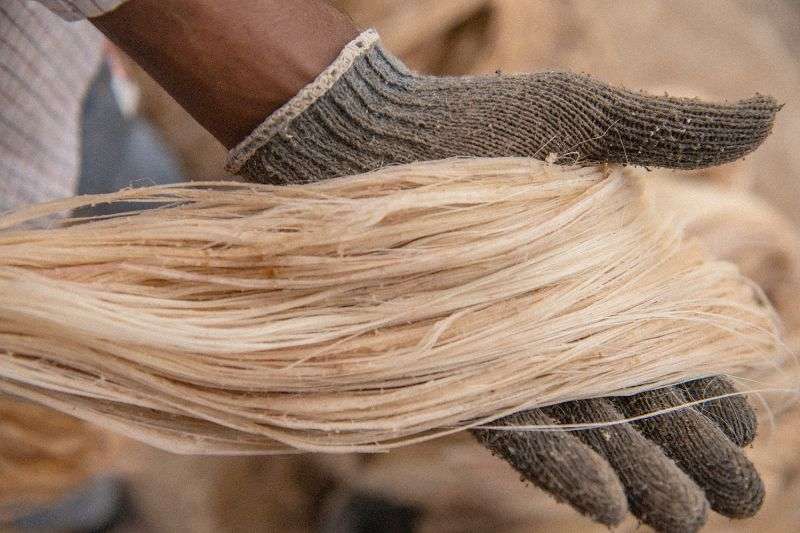
Using biowaste like banana stems underscores a broader move toward a sustainable bioeconomy, prioritizing feedstocks that minimize environmental impact. By valorizing waste, initiatives like the Guess and Interloop partnership demonstrates the potential for sustainable development, economic self-sufficiency, and a more equitable global economy, challenging traditional extraction and manufacturing paradigms.
This collaboration with Guess also signals a strategic expansion for Interloop, showcasing the versatility and commercial viability of banana fiber in the fashion industry. Previously, the technology was spotlighted through a partnership with Dinner Service NY, a sustainable clothing brand, in the production of socks. Further emphasizing its potential, Interloop and sustainable denim consultancy Simply Suzette introduced Unpeeled last fall. This concept collection highlighted the viability of banana fiber in fashion, featuring items such as jeans, a belted jumpsuit, a denim shacket, and a skirt, with fabrics comprising 20 percent Loomshake and 80 percent cotton.
Beyond the environmental benefits, Loomshake also offers economic advantages to local farmers by providing an additional revenue stream from what would otherwise be considered waste. This aligns with Interloop’s sustainability objectives, aiming for 70 percent of its materials to be sustainable or sourced sustainably by 2025.
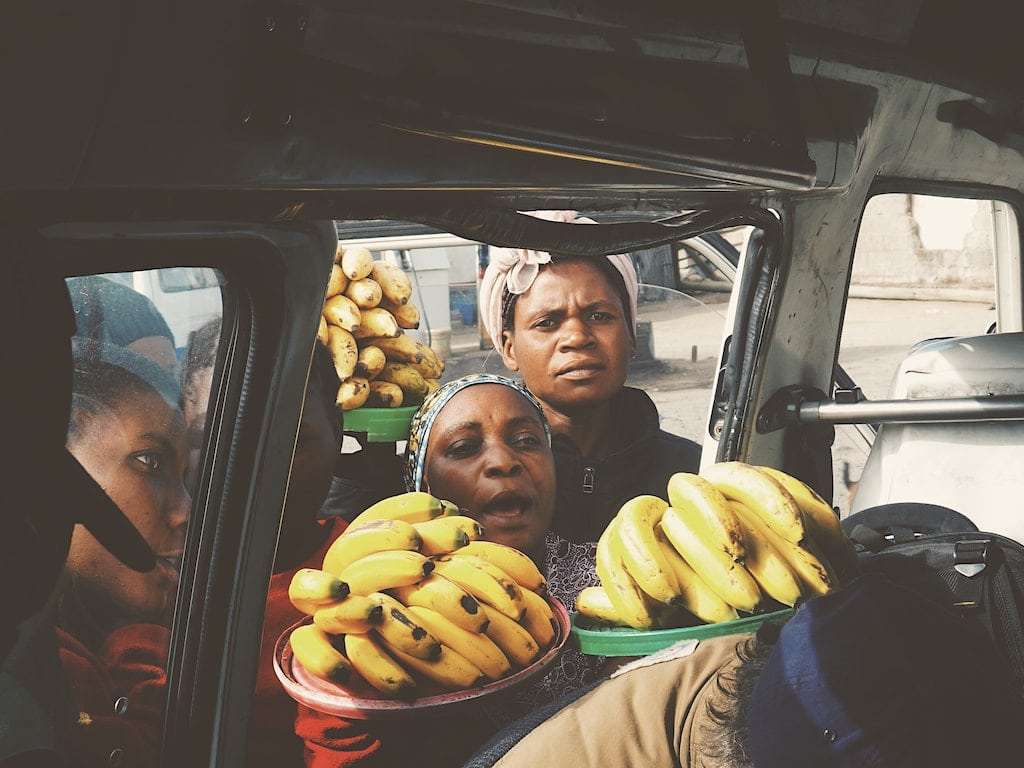
Annually, the world generates around 10 million metric tonnes of bananas, with the peels alone accounting for 3.5 million tonnes of waste. Beyond consumer waste, banana plantations discard nearly 60 percent of the plant’s biomass post-harvest, contributing significantly to agricultural waste. Amidst growing concerns over the sustainability of textiles, banana waste emerges as a promising solution to the fashion industry’s heavy reliance on fossil-based and water-intensive materials like polyester and cotton.
In Uganda, the world’s second-largest banana producer, TexFad is pioneering the transformation of banana waste into textiles and handicrafts, such as yarn and fabric, all biodegradable. It collaborates with smallholder farmers to source banana tree trunks left in fields post-harvest. This initiative not only promotes sustainability but also fosters economic development by providing additional income to farmers and skills training to weavers and processors.
Meanwhile, in India, the leading banana producer, Atma Leather recently introduced ‘Banofi,’ a sustainable alternative to animal leather made from banana stem waste and natural additives. Addressing the environmental issues associated with traditional and synthetic leather production.
Related on Ethos:
